
Community is Not Dead
Story by Khaiah Thomson, photography by Kym van der Plas
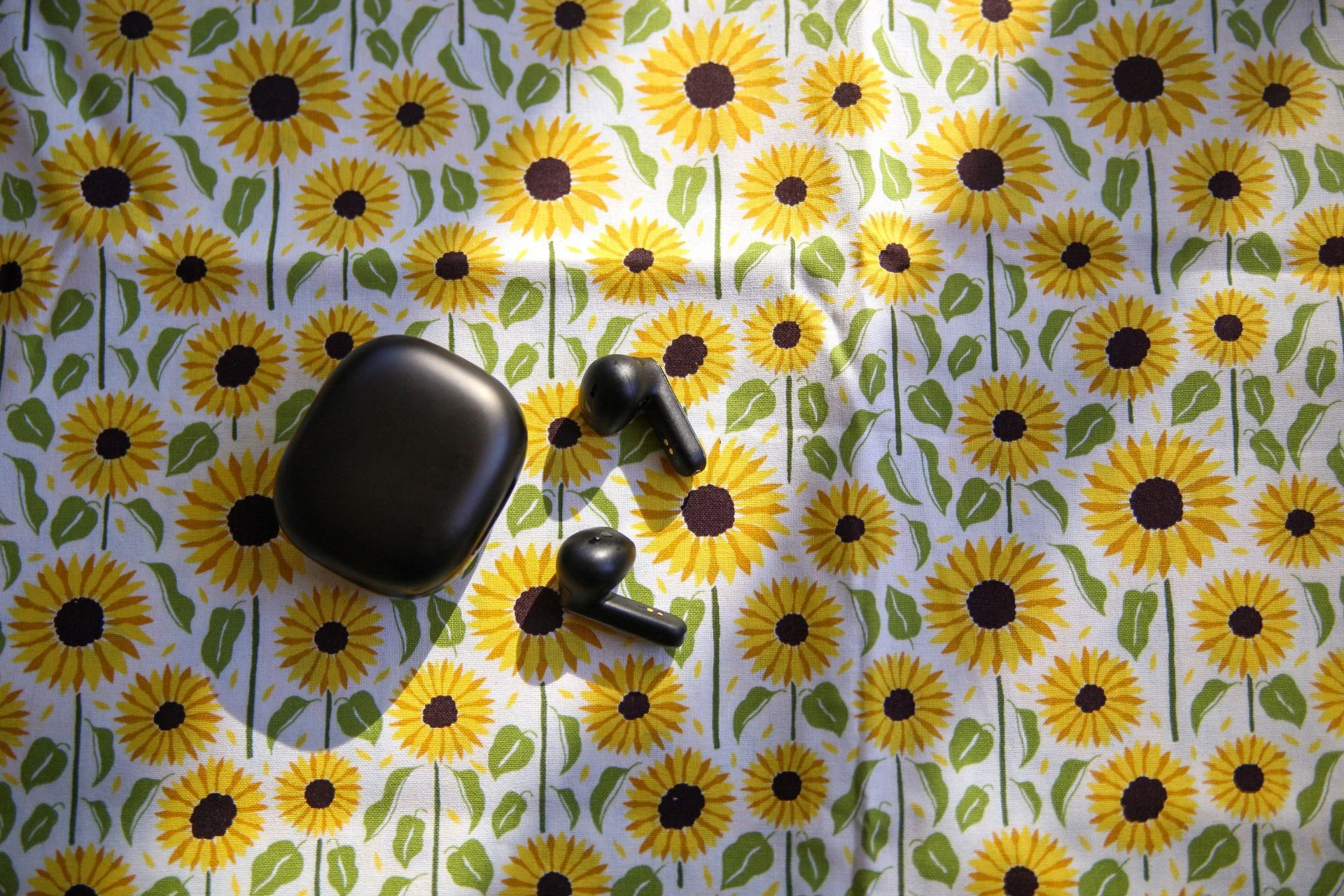
I left my AirPods in Tasmania. As far as I know, they’re either chilling by the Little Blue Lake, swimming with the platypi in the Ringarooma River, or, most likely, wedged between the bed and the century-old wall of a small hotel room in Winnaleah.
I first discovered the AirPods were missing after my sister and I had driven two and a half hours southeast to our next destination—there was no going back. Within minutes of checking every bag and pocket for the little white case, I messaged the hotel owners and begged them to search for them. Sadly, there was no luck finding them, not yet anyway. Over the course of our holiday, sporadic hours were spent browsing online earphone sales, but I never bought a new pair. There was still the possibility that they’d turn up in the post. But it felt strange without them. I don’t have them constantly attached to my ears, but I do use them while walking the dog, going to the gym, or, when I can’t be bothered with a screen or a book and would rather listen to music in bed.
It's now been over two months since I lost my AirPods and this is what I’ve learned:
I enjoy silence. Outer silence helps me to release the inner noise. When I’m outside, my mind can breathe, and this is even better when it isn’t interrupted by loud, repetitive music or lyrics.
I’m more mindful and more aware of nature’s noise. I now know the species of bird that makes that ear-splitting squark and I was surprised that such a small creature could produce such a boisterous sound. I know the raspy rustle of crisp autumn leaves ready to fall.
I’m more curious—about myself and the world around me. What does the future hold? How can I make the most of now? How does one tree have half a trunk covered in green leaves and the other half blazing red?
I’m more whimsical. Silence creates space for new story ideas. One side effect is that those songs that play on repeat in my brain get louder. No problem—I’ll hum or sing whatever song is stuck in my head. This is only an issue when I get caught singing in a public space or when that song happens to be something grating, like I’m Outta Here by Shania Twain or Whip It by Devo.
But the greatest thing I’ve noticed and appreciated about not being plugged into a phone or device, especially while walking, is that people are more inclined to say hello. I enjoy a chat with someone I pass on my morning or afternoon walks because I find that when someone stops to speak with you, they usually have something useful, interesting, kind, or important to say.
I’ve been stopped by people four times this week. The first time was a man who used to train sheepdogs. He gave me some helpful tips for socialising my unsociable dog. The second person told me that the reason my dog goes silly at a certain part of the walk is because he can smell the kangaroos that cross the path there—who’d have thought? The third person shared all the gossip about the huge crane that had tipped over on the roundabout up the road, causing traffic chaos.
“Did you hear that he took the corner too sharp because he was looking at his emails? Took them nearly two days to move that monstrosity.”
The fourth person, who happens to live on our street, told me all about the previous tenants who’d lived in our house. He told me some fascinating stories which really motivated me to get quotes to replace the carpets.
I’m not always a people person, and perhaps, for some of you reading this, there’s nothing worse than making small talk with a stranger. But, I genuinely enjoy chatting with people who are familiar and yet still strangers, and I love the sense of community that comes with it. There’s another reason I think people stop for a chat, and it’s an even stronger reason to leave the earphones on the kitchen bench.
Loneliness.
We are living through a loneliness epidemic. In 2025 Beyond Blue surveyed five thousand people and found that 30% of people reported feeling “persistently lonely.” Another report, completed by the University of Sydney and focused on loneliness in young Australians, found that 43% of people aged fifteen to twenty-five feel lonely…that’s more than two in five young people.
In Australia the economic burden of loneliness stands at $2.7 billion each year due to associated healthcare costs, and there have been growing calls for an Australian National Loneliness Strategy to address the issue. How sad it is that society often only sees something as a serious issue once there are financial repercussions. While $2.7 billon may seem a stretch, loneliness has been shown not only to impact mental health but physical health as well. According to The Medical Journal of Australia, “loneliness and social isolation have been linked to common chronic diseases, such as heart disease and stroke, diabetes, dementia and depression. Loneliness and social isolation also increase the risk of premature death by 26% and 29% respectively.”
We live in a world that is becoming increasingly insular. Gone are the days of dances at the local hall and Blue Light Discos. Street parties, neighbourhood barbeques and even the concept of Neighbourhood Watch is dwindling. Population density is increasing, yet the growing height of property fences seems to reflect our desire to remain isolated from our neighbours. Even our safe, convivial, social spaces are slowly disappearing. Add to that the absence of God in so many people’s lives and we have a catastrophe.
Years ago, some friends and I completed the Gospel in Life study by Tim Keller. One of the modules that stuck with me focused on the importance of “living in the world, but not of the world.” It highlighted how easy it is to become consumed by our own lives, desires and ambitions, while God calls us to “live in the world” by contributing to and participating in our communities. Hebrews 10:24-25 states, “And let us consider how we may spur one another on toward love and good deeds, not giving up meeting together as some are in the habit of doing but encouraging one another—and all the more as you see the Day approaching.” Although the author is referring to the Christian community in this passage, it can easily be applied to the greater community.
To address the global loneliness epidemic, I don’t think we need to live in each other’s pockets—not everyone would want that—but small changes, to show our neighbours a little bit of love, a reflection of God’s love, could make all the difference. A casual “hello” to somebody on the street might say, “I see you” to a person who feels invisible. Listening to advice from a retired sheep dog trainer might say, “You’re knowledgeable, and I value you.” Helping someone reach an item from the top shelf at the supermarket might simply remind them that there is still hope for humanity.
If I can do one thing that breaks the mould of inward-looking living, whether that’s saying hello to someone at the gym (yes, I know, what a weirdo) or slowing down for a chat on a walk, then it’s worth it. If I can make small changes to show others that community isn’t dead, then I know that it will do me some good and bring a little joy into my day, and I hope it does the same for them too.
If this story resonated with you, sign up to get honest stories in your inbox for free on Wednesdays from Christian women in Western Australia from March—November 👇🏻
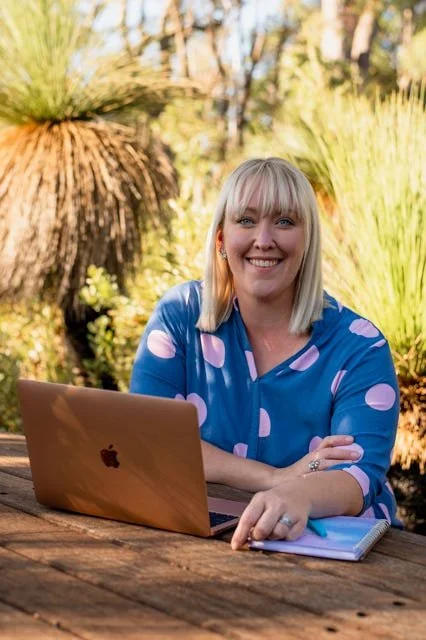
Khaiah Thomson—Regular Contributor
West Australian Author Khaiah Thomson pens the Blackwood series. The first book Welcome to Blackwood won the Hawkeye Publishing Manuscript Development Prize in 2020. Khaiah first decided to write young adult fiction novels as a way to exercise her brain while on maternity leave. She wanted to create a magical escape for young readers, all the while gently weaving in themes of God’s love through the timeless battles of good versus evil, unconditional love and the power of redemption.
Khaiah lives in Perth with her husband and two sons. When she isn't working or in her home office writing, Khaiah can usually be found nose-deep in a book, gaming or at the nearest cafe, hovering close to the coffee machine. Khaiah’s Welcome to Blackwood series can be found in all good bookstores and Hawkeye Books.