
Story by Rebecca Marie, photography by Kym van der Plas
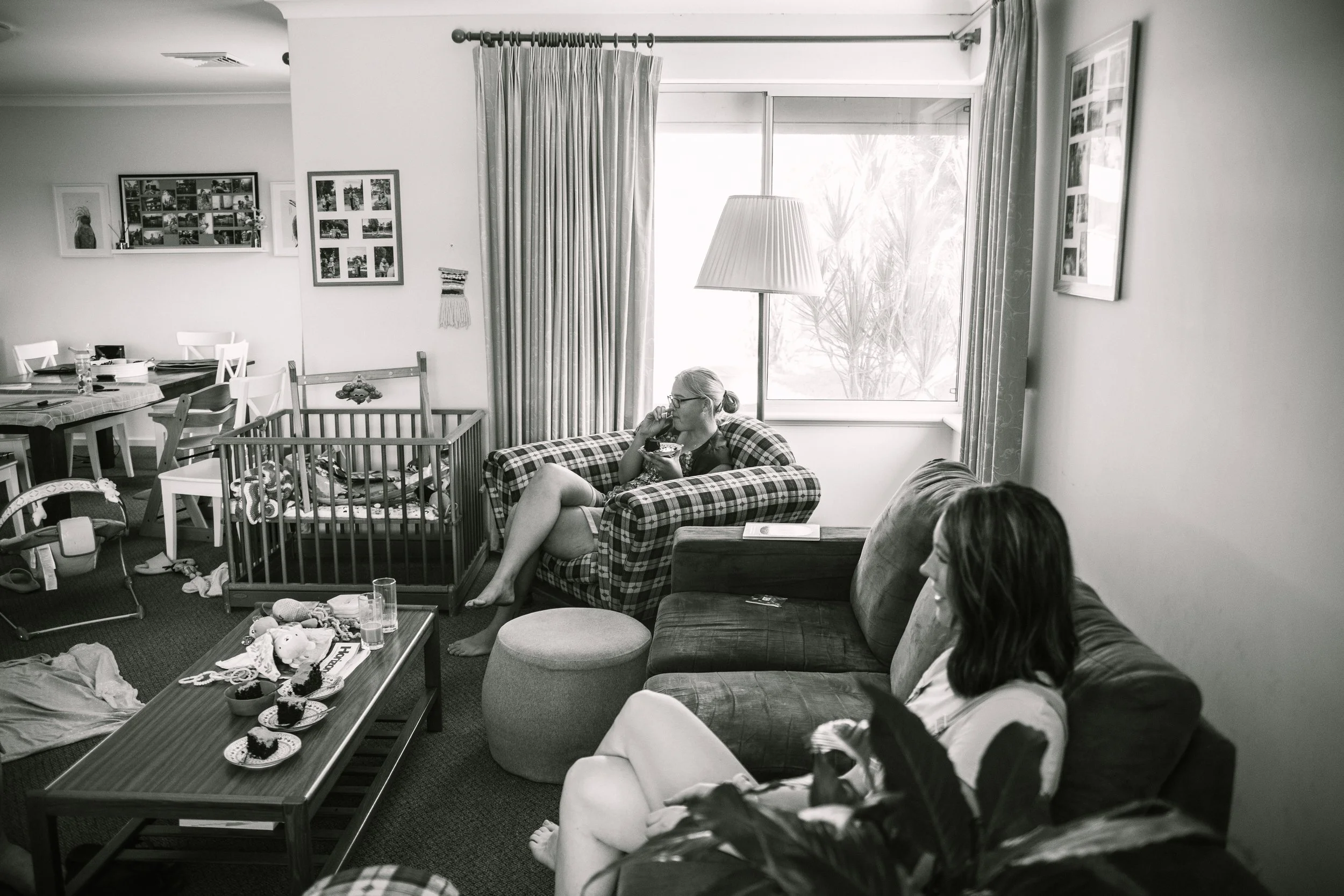
I’ve often wondered whether I’m an introvert or an extrovert. In certain phases of my life, I’ve retreated to books. I hide with a pen and journal in my room when I’m stressed. Ticks all round for introvert. But I remember doing some personality testing that said I was an ENFJ. The E stands for extroverted, and at the time, I was surprised.
In the last year or so, I’ve taken to noting down the things each week that energise me and drain me. Topping the energy list every single week are moments of connection. Phone calls, a spontaneous coffee with a friend I ran into at the shop, interviewing for the podcast, collaborating with someone on a new project, debriefing a friend’s depression, making friends at the park, cracking jokes around the campfire, or eating dinner with a mob of adults and children once a fortnight. In my twenties, in charge of my own calendar, I would go out almost every single day and night to socialise, sometimes multiple events in a day, much to the chagrin of the chores. Suffice to say, my husband has been a wonderful, peaceful influence in my life.
The worst jobs I’ve had have been the office-by-myself types. More than once, I’d roll my office chair to the door, stick my head out into the hallway and look both ways down the corridor. If no one was around, I’d abandon the office chair and amble down the hall to find someone, anyone to talk to. My friends know me as the one they can send to talk to the new person, the one who will strike up a conversation with anyone. But, and this is a big but, I think people assume that because you are the friendly neighbourhood extrovert, this is a skill you didn’t have to learn, you never feel anxious about it—you were just born knowing how to make small talk. And this is not true.
Perhaps if it had not been for my nineties childhood, where I had to pick up the phone or knock on doors to ask if my friend wanted to play, I might not have developed these skills at all. I was a shy kid, in comparison to my gregarious brother. Like, yes, I’m energised by connecting with people, but I’ve also spent a lot of time worrying that other people are secretly mad at me, which has made the distinction confusing. Similarly, if I hadn’t had a run of socially awkward jobs—starting conversations on front door steps, courtrooms, hospital bays, prison group rooms, and empty primary school classrooms—I wonder if I would still worry about talking to the new person.
One day, watching my boss, who seemed to ooze confidence and authority in striking up conversations with ambivalent people, I asked him how he did it. And he said, “Ask people questions they’ll enjoy answering before you ask them anything they’re not gonna enjoy. Find what they’re doing well, remember that not everything is going badly, and it’ll put them at ease to answer the things you need to talk about.” This reframe was good for my brain. A good conversation is just not determined by what energises me. It’s not a good conversation because I managed what I imagine the other person thinks about me. I can stretch beyond convenient and comfortable because God works in the unlikely and inconvenient.
Sometimes, I look around at my suburb and wonder if it wasn’t all designed by a highly anxious person. Someone who sees interacting with other people as an inconvenience, something to avoid at all costs. An anxiety disorder is maintained by avoiding the thing that makes you feel anxious. The anxious woman doesn’t want to talk to the old duck scanning her groceries, she’d rather do it herself. It’s better than the anxiety of a conversation. The anxious woman won’t pick up the phone, preferring only to text. The anxious woman wants to have her headphones on and not make any eye contact at the gym or on the bus. She doesn’t want to talk at the school pick up, at the park, to the teller at the bank, or with the other woman in the GP waiting room.
I’ve had to tell myself, sometimes when I’m worried about striking up a conversation and what they might think of me, this is worth the anxiety. I can tolerate the anxiety of what other people might think of me. Once I’m in the conversation, I’ll not only forget my fear, but I might have a fun chat too. I can get outside my comfort zone because most people are waiting for someone else to ask the first question because they’re scared too.
Hear me out, I’m not saying we have to talk to each other all the time. I’m not saying introversion is bad. Even extroverts need space and quiet. Even Jesus carved out to get away, rest and pray. But I wonder, as a society, how my kids will learn to make small talk with others, when those opportunities are slowly less available? I wonder if we’re modelling to our kids that it’s better to be alone, that anxiety always needs to be heeded?
Tolerating the anxiety of striking up a conversation with a new person seems to be a symptom of a larger problem where we’re less inclined to do the quiet work of tending and maintaining relationships. It’s inconvenient. It’s uncomfortable. It’s easy to say, “Protect your peace.” It’s easy to say, “You do you.” It’s not easy to do the messy, necessary work of being a villager.
My elderly Thai neighbour dotes on my three boys; they chat to her over the fence and she passes them wafers. Sometimes she turns up with a plate of sticky rice and mango for them, or spring rolls and chicken. I must confess, I cringe. I rage internally. It’s often at 5pm when I’m in the middle of cooking dinner and the kids are loading up on sticky rice. Or she bangs on the window during nap time. It’s not convenient.
But then I think, my Thai aunty is on her own in the house next door. She’s retired and it’s a long day by yourself. Who even cooks for anyone these days? So I fling open the door and invite her in. She sits at the table while I’m cooking dinner and asks my boys questions about their day. My Thai aunty isn’t bothered by the noise, how my boys run around the table and shout their answers, or the state of my floors at 5pm, rather her delight in these little white boys wolfing down Thai food is evident. She has a chat and always says she can’t stay for dinner because she has to watch Deal or No Deal.
My boys make her birthday cards and knock on her door to drop off veggies from our garden and drop her plates back. Sometimes I help her with her phone. Once I called the Police for her after she was robbed. We’re moving to a country town soon and my Thai aunty is sad we’re leaving and worried about who might be her neighbour next.
I can’t help but wonder if asking whether I’m an introvert or an extrovert is the wrong question. Maybe the question is, “Am I willing to open the door when it’s not convenient for me?” When I’ve opened my home, imperfectly, when it’s untidy, and tolerated the inconvenience of conversations when I wasn’t in the mood, I’ve been blessed. Whether I’m an introvert or extrovert ultimately doesn’t matter. Am I willing to tolerate my anxiety to love those who God has sent me?
If this story resonated with you, sign up to get honest stories in your inbox (for free!) on Wednesdays from Christian women in Western Australia from March—November 👇🏻

Rebecca Marie
FOUNDER/WRITER/PODCAST HOST
Rebecca is married to Zac and they have three boys. She became a Christian at 18 years old after someone read the gospel of Luke with her. She is the founder of Stories I’d Tell You at Dinner and The After Dinner Mint podcast. She is a regular contributor to Part Time Poets and The Gospel Coalition Australia. Her spiritual gift is losing things. You can find more at The Sunday Morning Snuggle.