
When You’re Scared You Did Something to Deserve Your Suffering: An Interview with Bek Stone (Season 2, Episode 11)
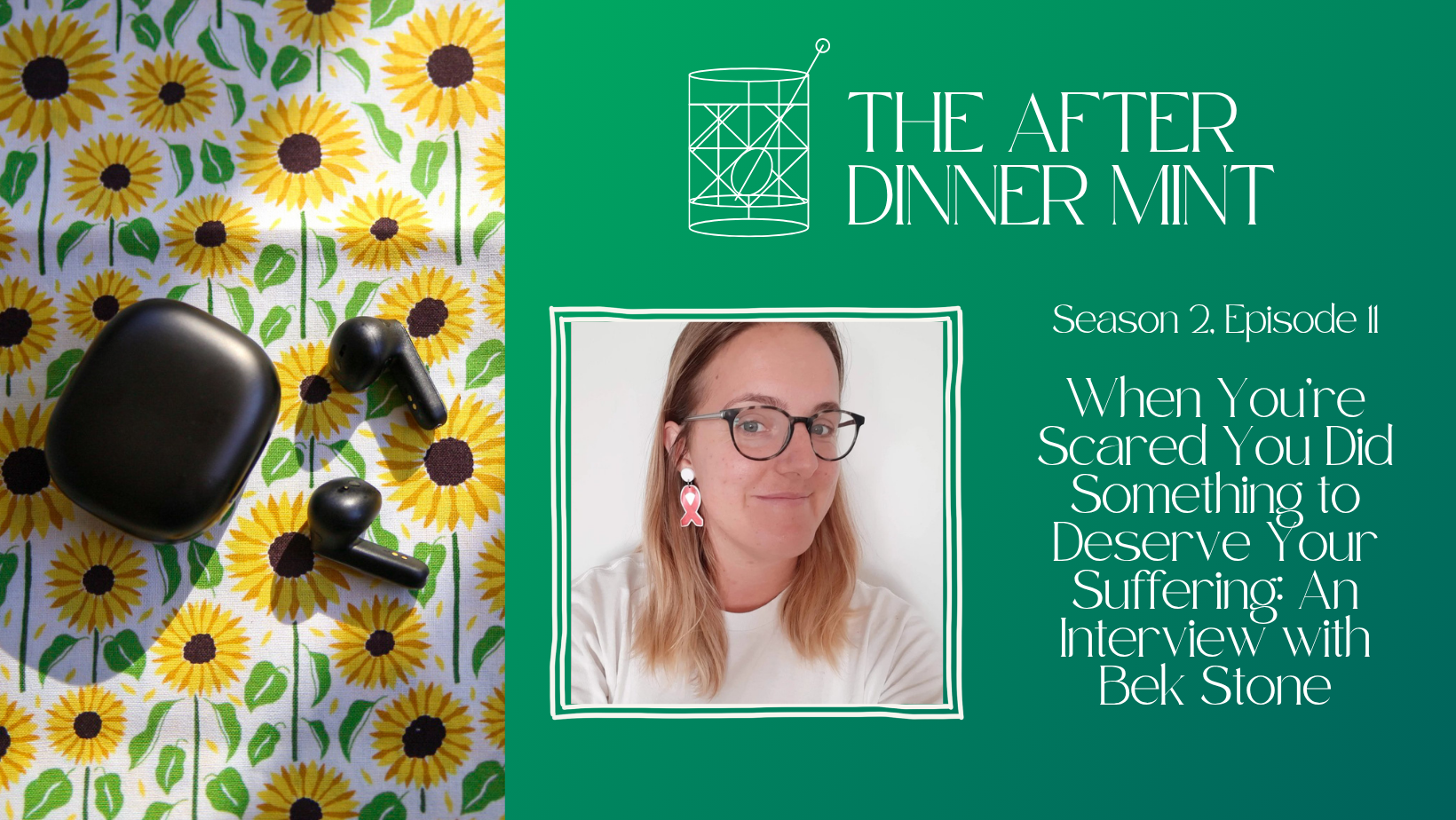
Today I’m chatting with Bek Stone—a mother of two, physio, and BRCA2 Breast Cancer survivor from Albany, who runs the popular Instagram account @mastectomytomarathon. Bek was diagnosed with breast cancer at 32 years old when her youngest daughter was 19 months old. She initially thought she had mastitis but ended up with a double mastectomy and breast reconstruction in 2025.
A typical physio, who adores running, Bek looked around for a creative outlet to encourage others while she recovered from her surgeries and landed on documenting her recovery (and nipple choices!) on Instagram. This chat was so honest, encouraging, and made me cackle on multiple occasions—I hope you’ll listen in, even if you are not facing a breast reconstruction.
In today’s episode, we explore:
Growing up in a Christian home with her mother who was a Christian, in amongst a long custody battle between her parents and bouncing around churches, but her mother consistently prayed with them.
Coming to faith when she moved to Perth for uni. Bek shared how ministry wives, Sally Surrey and Liana Hunt, invited her into their homes and shared their lives while raising their young children, and what a blessing this was to her.
Bek explained that she had been taught to expect suffering as a young Christian and spent a lot of time in the Psalms, which truly opened up to her when she suffered as she learned to bring her anger, anxiety, and sadness to God.
The blessings of running, gratitude, being present in the everyday moments, and the care from her church community, which helped her to persevere.
Mentioned in today’s episode:
Whoever dwells in the shelter of the Most High
will rest in the shadow of the Almighty.
I will say of the Lord, “He is my refuge and my fortress,
my God, in whom I trust.” (Psalm 91: 1-2)
Women who encourage Bek: Liana Hunt, Sally Surrey and Anna Rhodes
Transcript
RM: Hello, I'm Bec, and today I'm here with Bek Stone. Uh, so Bek is a physio. She's a mum of two based in Albany. Uh, she's also the content creator behind Mastectomy to Marathon. Okay, so really great to have you here. Can you tell us a bit about what your typical week looks like for you? What kind of things make up your week?
BS: Yeah, absolutely. Uh, a typical week for me is very full. Uh, I work zero point five. So Monday, Wednesday is an alternate Fridays and I mostly run a pulmonary rehab program in Albany. Uh, and then I'm home the other days of the week, catching up on all of their housework, trying to meet up with friends and move my body and fill my cup a little bit. As well as serving at church on a Sunday, mostly in music ministry, which is something I really enjoy. Oh yeah. And trying to fit in. Definitely a park run and maybe one other run during the week at the moment.
RM: Yeah. See, I'm so impressed by this. Like I have talked at length with Maddy Rhodes about this. I'm like, I wish, I wish I was a runner. I want to be a person who runs. But it just it really makes me angry. Like every time I'm like, I can't do this.
BS: My sort of philosophy is anyone who runs is a runner. So even if you run like twenty metres and you're running, you're a runner. And so that really opens it up to anyone. It's very accessible. So you can be a runner. Bec, I believe it.
RM: how did you get into running?
BS: So running has been a really helpful part for me, sort of postpartum to move my body again and find some time where I'm outside in creation and nobody is touching me. Big fan of that. And I also really like, um, probably more so when I'm walking, but praying when I'm walking. Um, and yeah, over the last couple of years with certain challenges in my life, it's just been a really great place. If I'm feeling anxious or like I just can move my body and sort of move through those, you know, particularly, you know, not nice feelings. So that's why running has become very appealing to me.
RM: Yeah, like I like that when you're explaining it. Yeah, it does really come. It combines that couple of things. You're like the quiet, the alone, the prettiness of like outside and actually kind of the high you get from not that I can say I get a high from running, but I have done like long stints of swimming just to be like, I am by myself. Don't talk to me and I need to get some exercise. Yeah. yeah. Excellent. Which I suppose kind of segues quite nicely into what are you doing that makes you feel like the most alive? Kind of like, this is what I was made to do?
BS: Yeah, I really love that question. I think the first time I was asked it by someone else, I realized I feel like myself mostly when I'm sitting by my kids playing sport. So like soccer down in the sunshine, cup of coffee in my hand outside. Yeah, I think that's when I feel most like I was made to do this. I was made to sit here and cheer on my kid and see them having fun. I love that that's like the highlight of my week for sure. Except when it's raining.
RM: Doesn’t it rain a lot in Albany?
BS: Like no, no. Well, this is, it's a, it's a very well kept secret, but it very rarely rains on Saturday mornings.
RM: So this is good to know. I love this because I'm like, I'm not particularly sporty. In fact, every sport report of mine was like, Bec is very enthusiastic, has not mastered the required skills, but I'm like, I could really get into being like sidelines Mum. Yeah. I'm not teaching you any skills… It seems like that common theme is like being outside kind of just doing stuff where you're like, I'm, I'm here, I'm really present. And I'm just like savoring this moment.
BS: Yeah. I, you know, I do lead a very busy lifestyle, but I think it's when you can capture those moments where you just take a moment and take in everything, like all the sensations of like the sun and or the cold breeze and the smell of your coffee and like the kids laughter, all those things. It's just beautiful. And yeah, it's definitely something I've learned to do more. So now, after some of the challenges I've faced in the last few years, just to appreciate those moments in the every day. I think you start to look for them more. I think they're called glimmers or something. Is that the term for them? Yeah. Yes, definitely. Yeah. like it's that polyvagal stuff. But I, I think it's that like, I would say I'm very talented at like jumping forward to the future, taking problems I don't have from there yet or like worrying about the past. But I think there's a real art to it of actually just being present where you are. MM. Yeah. I think definitely trying to lean into just the gratitude of the everyday and also like wrestling with the mundane and trying to see the beauty in it and see it as a gift of like, oh, how, you know, I know, like there's toxic positivity, but like, oh, how wonderful that I live in a house and I can wash the dishes and, you know, cook yummy food for my family. All those things, those tasks that sometimes you think, oh, this is hard work. But yeah, I try and hold on to the really positive moments in those things as well.
RM: Mhm. And like, the cool thing is like, it actually just changes your brain. Like if you're constantly looking for the positive, you know, not, not unlike, not like you said, there's that toxic, toxic positivity, which can't acknowledge any bad. But I think actually just being like, yeah, there are good moments to be seen here if I look for them. Like, yeah, actually does change things. Now I actually don't know the story. Um, how did you become a Christian?
BS: So I was raised in a Christian family. Um, my mom was Christian. My mom and dad separated when I was quite young, and there was a long custody battle. But right through that, you know, we were going along to church, except we visited lots of different churches. So I've been to, I think every denomination under the sun growing up, which has been an interesting experience. And then there was actually quite a long time when my family weren't going to church. But, you know, mum was still always talking to us about Jesus and we'd pray every day. And so I suppose, yeah, we were a Christian family that didn't really have a church family, which I found a bit challenging, I think, in my teenage years. You know, and I was at a Christian school, and so I was learning about the Bible and had other Christian friends. But yeah, I think mum had had some challenging experiences in churches and I think was a bit hurt and just needed some time out.
So it was that kind of classic transition of leaving home to like move to university, where I had to sort of make that decision of like, is this my family's faith or is this my faith? And what, what does that look like living out of home? And how do I live as a Christian whilst I'm navigating, like going to university and living on my own for the first time and, you know, trying to be able to communicate kind of some, you know, complex ideas sometimes when I was having discussions with other people about topics, I was like, had to really nut down what it was that I believed. So like, I don't think there was a real conversion moment. Like some people have, but it was just like looking back, like little moments of God calling me to him and giving me opportunities to, to follow. And yeah, I was really grateful for uni church at Saint Matt's, uh, that I think we're really intentional about loving uni students like myself from the country. And I really benefited from that. And really, yeah, good teaching and a welcoming community.
So yeah, I think like if I had to pick an age, I'd say I probably became a Christian when I was nineteen. Um, yeah. Yeah. That's so great. I became a Christian when I was like eighteen. Yeah. Nice. It is that kind of period of your life, isn't it, where you're. Yeah. Stepping out as an adult and yeah, having those big questions about the world and where you fit into it and what's the purpose of this all? So yeah, it's an important age and stage of life, I think, and important that Christians are pouring into people in that age as well, I think.
RM: Yeah. Yeah. Like, and I think there's something like you're saying there's something really about that stage of life where I think people are so open. Like you're really wrestling. Like what? Yeah. What is the point and purpose of everything? Where am I going? What? What is my meaning? Where do I want to do that? Almost the stuff that people land on. You think they really hold to that? Um, so much later. There are so many people who are like at uni church, and you can see them just kind of scatter across the state for actually really intentionally. Yeah. Yeah. Like, so who's someone who like, has really encouraged you in your Christian walk and why? Yeah, there's a long, long list of people at different ages and stages of my life.
BS: So I'm really grateful to God for that. I think it's interesting now, like the season of life I'm in as like a mom of two children and working part time and serving at church. I'm really grateful for the ministry of both Sally Surrey and Liana Hunt. Um, and how when I was a student, uh, in Perth and studying like they'd invite me into their home and, and feed me. And I didn't really realize at the time, but just in how they're raising their family to know and love Jesus And how much like I just sort of absorbed that experience and how kind that was of them. I just think that's such a, you know, it's not a formal ministry that gets a title at church, but I think that's so, so important to invite people into your home if you have capacity to do that and to show them Christian hospitality. Because I definitely, you know, try and recreate that now by inviting other people to our home and sharing our kids with them. And yeah, sharing a meal and just showing them love. It's had such a huge impact on me as a mom. Um, and I think sometimes in motherhood, you feel like you're like, I don't have much to give. Like, how can I contribute?
Um, but yeah, that really has their Christian example of inviting me into their home and yeah, show me Christ's love, you know, amidst the busy, messy season of mothering young children. I think that will always stay with me. I'm very, very grateful for for that. I love that like, and just in like, I'm with you, like there have been people along my Christian walk where they have just been so hospitable and I haven't really, truly appreciated it until later where you're like, oh, you, you invited me in. You let me see like kind of how you live your life just in amongst all the quietness and you don't realize like how much you're kind of just absorbing and thinking about how you could live your Christian life just from watching them.
RM: Mhm. But it's so interesting because I was just editing Bethany Smith's podcast interview, and I don't know if you know her. So she's one of the writers, but her husband is at Iowa Christian Union. Yeah. Cool. And she was talking about like one. She's like, oh, you know, I used to do it and I was on site there. But actually now like, you know, they have three kids and she's like, I'm at home. But one of the things I love to do is have people in my home like have uni students. Like that's yeah, something really beautiful and special about that. Even though it's not, I don't know, the world would say it's not important, but it really is.
BS: Yeah. It's had such a huge impact on me and even how I'm raising my kids now. Like there's all these skills I picked up from sort of, you know, observing them raise their children. Yeah. And just beautiful. Yeah. That's great man. That's so cool.
RM: Can you tell us about, like, a hard season you've walked through and how you've experienced God's faithfulness through that season? Mhm. Absolutely. So obviously with my Instagram title being mastectomy to marathon, I might give a bit of a hint that I have gone through breast cancer in the last couple of years. So I was diagnosed when I was thirty two years old. Um, and my daughter, my youngest daughter at the time was nineteen months. Uh, and it was like a real shock at the time, of course, because no one's anticipating to get breast cancer at thirty two. Yeah. So yeah, I suppose it's probably useful for those of us that have breasts to sort of know what my symptoms were. So I was still breastfeeding my daughter, um, and just had like a weird sensation in my breast that wouldn't go away. Um, and so I thought, well, maybe it's like mastitis or whatever.
So I just went and saw the GP, um, explained what was going on and she took it pretty seriously and you know, sent me for a scan and which then the scan was like, well we need to biopsy this. And so yeah, that took a little bit of time going through all the scans and that. But yeah, then was diagnosed. It was quite an early stage. So stage one A for those that are medical among us, which it was a very small tumor. It hadn't spread to my lymph nodes. And so I then had a lumpectomy to remove the tumor. And then I had to move to Perth for four weeks to have radiation treatment, because at the time that wasn't available in Albany. So I think, you know, obviously the just the difficulty of being diagnosed with cancer was exacerbated by having to move away from my family, you know, with small kids.
RM: Where did you stay?
BS: So I stayed at the Cancer Council. They have accommodation, which is just such a blessing. Um, so that's Crawford Lodge. It's next to Charlie's. Um, but then because I'm in the Fiona Stanley catchment, I had to, they had like a shuttle, but every day I had to go to Fiona Stanley for my treatment, which was silly. I was like, I could just walk over there. And they also do radiation. But yeah, that's not how it works, unfortunately.
RM: Gotta love bureaucracy. Like, but it's right there.
BS: So yeah, I had radiation for. Yeah. So radiation for four weeks. And whilst I was having radiation, I also had a consult with a genetics counsellor to test to see if I had one of the genes that sort of linked to breast cancer. They often will do this for younger women. And so I had a blood test and the genetic counseling. And then a couple of days after I finished radiation, I got a phone call to say that I had the Brca2 gene variant, which has, yeah, has an increased risk of breast cancer. So up to seventy percent. So most women with a. Yeah, the BRCA two variation will get breast cancer in their life, or seventy percent of them will. And so at that point, it was recommended to me that I had to have a double mastectomy because the chances were I would get another breast cancer in my lifetime. And so I had a double mastectomy in February this year, and an immediate reconstruction using tissue and fat and blood vessels from my abdomen.
RM: Yeah. Whoa. That's a that's a lot of change.
BS: Yeah. It was a big surgery. It was like twelve hours. And then I had three months off work to recover. And that was difficult for lots of reasons. Like not being able to pick up your kids or do your housework. But I also couldn't run, which had been your primary coping a lot of change, which, you know, had been that thing that helped me when I was feeling sort of anxious. I couldn't do that thing anymore. Yeah. Yeah. Right. Yeah. Like, not only is everything changed also like that over the last two years. Both my parents also passed away. Yeah. Oh, big. Yeah. So yeah, the amidst all of that. Yeah, my, my mum passed away and my dad passed away five months after her. I think in terms of how God has shown me his faithfulness in this season has been like multi-factorial.
And so some things I'm really grateful for is Firstly, as a young Christian being taught that suffering was to be expected in the Christian life. And so when it came, I was prepared because I'd been warned to be prepared. So when the suffering came, I thought, this is the suffering I have been warned about. Thank you to all of those, you know, pastors and people of faith who had forewarned me.
Something that was really interesting to me was I'd kind of really struggled to read the Psalms prior to all of my diagnosis. And I, you know, I was like, I need to understand the Psalms. You know, I read them and I don't really understand them. So I went and did a Trinity at night course when I was still living in Perth. And, you know, I was engaging with the Psalms and like, I was like, oh yeah, the Psalms of lament and just kind of trying to understand it intellectually. Yeah. But it was, yeah, only after I started to experience the, you know, the suffering that I was like, oh, wow, the Psalms are just the most amazing gift to us in the Bible. Yes. Um, because of all the comfort and seeing, like David kind of speak to God and be like, I'm angry and I'm sad and I have all these big feelings. But it just really helped me to be like, oh, God is big enough for my big feelings and I can take them to him.
RM: Yes. Yes. Like he can hold all of it. Like, I have been doing the Psalms this year, like the devotional, uh, which I just generally do after I have a baby. It's just the only thing that I can read. And but what I. Yeah, like the one I read yesterday was Psalm eighty eight. And it was the only one, you know, it's the only one that doesn't have like even a bright moment at the end. Yeah. But it's that you're like, you're just struck by that. He poured all of that to God, and God was like, I. I can hold this.
BS: MM. Yeah. And what a great comfort to be like. Oh, actually, God knew about this. And God's going to give me what I need to trust him and walk through it together. And just that. Yeah. That was so, so helpful to me. And for me in particular, Psalm ninety one was the psalm that I just kept going back to. And like just the first two verses, which was really sweet. My sister in law did a little cross stitch of these verses for me, which was very kind. But it says, he who dwells in the shelter of the Most High will abide in the shadow of the Almighty. I will say, the Lord, my refuge and my fortress, my God, in whom I trust. And for me, that just gave me this picture of like abiding in the shadow of the Almighty. It's like you're just like, I'm here and God's just like I have. I have you like. And for me, abide was like, not this. I didn't have to strive or, or like try really hard. It's like you're actually just there and that's, you're like, I'm here and I'm trusting you and I'm abiding and I'm in your shadow. So yeah, that was that refuge and that fortress and that. Yeah, in the really difficult moments, I would just really hold on to those, those words. And I was like, I trust this God. Like, yeah, I trust you.
RM: MM, I love that. I mean, the picture I get of you and tell me if this is wrong is like, you're very competent, like you really, you know what I mean? Like, you're very competent, you're doing a lot of things. You're like, I can move through all of this, you know, even like I'm, I'm gonna run and like, just that image of you running, like I've got to move. I will move through this. But I love that actually, at your lowest, you're like, I'm I don't have anything. I'm just I'm just going to hold on. Yeah. Like I'm just going to be still before you.
BS: Yeah, absolutely. And it has just been that lesson, I think, as being someone who is a bit of a doer to, you know, in this season to be like, oh, okay, I can't be a doer at the moment. I have to like receive and I have to like. Yeah. And that was a real lesson as well of just like receiving like God's love from my church community. It was just like a massive outpouring. Yeah. I was just like, yeah, these are like God's people and they are surrounding me and they're praying for me. My church phoned me a prayer quilt like, oh, the sweetest thing. Oh, that's so sweet. Um, and so it's like up the front. And so for like a month, people could come and like, pray, and then they'd tie a little knot in the quilt. And so at the end of the month, you get this quilt that's had all these prayers. Like it's just a beautiful ministry, prayer quilt ministry. Ministry. Who, who would have known such an important ministry of that?
RM: But it's that's, that's beautiful. It's like that physical thing where you're like, people have actually, every knot is a prayer. Like that's different to just being like, sorry, this is me verbally processing out loud. I'm like, yeah, you can be like, I'm praying for you. But to see all of those knots, gosh, like, what else did your church do that was helpful?
BS: Yeah, it. Yeah. So there's, you know, just practical things like making sure we had meals, you know, especially post-surgery when I couldn't lift anything heavier than five kilos. So yeah, meals and prayer And yeah, I think just the amount of people checking in with me. Um, yeah, we definitely have felt so loved by our church community. Yeah. So, so grateful for them.
RM: That's beautiful. Oh, man. So is there. Like, I don't know. I mean, I would say breast cancer, but also like, I feel like the things you describe, like there was so much suffering in one go. Like so many major griefs and transitions. Like what would be a word of encouragement you could offer to a woman, like walking through a similar season. Yeah. What would you how would you encourage her?
BS: Oh, it's a it's a good question. I think it's hard to give sort of specific advice because I think these sorts of things bring up different challenges for different people. Um, but I think for me, it was to just keep trusting God. I've always loved that image of like clinging to the cross. And, you know, when you get such a confronting diagnosis, I think there's this risk of that. You think, oh, God doesn't love me or. Or like, I've done something to deserve this, but just holding on to actually, Jesus died for me. He defeated death. He's seated at the right hand of the father. I think there was just moments where I would be like, actually, what is it that I believe? Like, what are the truths that I believe? And that was really comforting to me to be like, okay, this is what I believe. Um, and, and I think, you know, we live in the, in the world where there is this emphasis on the here and the now.
Um, and of course, like, it's scary to consider that I might not have been here for my kids. Um, and I think that was probably something that was really challenging was to like, what do you do with, with that? Like, God help me with those feelings and that worry. Um, and I think surrounding yourself with people who can, you know, sometimes people don't, um, need, like, lots of words. They just need someone to be there in the room with them. Um, and so that has been really helpful to me is just to show up and to, to be there and to sit with someone when they're grieving. Um, you know, if it's regarding like losing a loved one, you know, creating space to talk about that loved one. Um, yeah, because the West is pretty terrible about talking about death. So yeah. And there's this kind of thing. It's like, oh, we don't talk about that.
And that's, I think a lot of people I've spoken to who have lost someone, it's like, that's possibly the worst thing to be like, never to mention them. It's like, actually, no, you know, they had such a huge impact on my life. And, you know, I think about them a lot of the time. So I think that's something that's really helpful if you're walking through a season of grief. Um, yeah. And just making space to. Yeah. I think like the psalmist do talk to God about all of the feelings, like the, the wild wide range of like the anger and the, the disbelief sometimes, um, like, yeah, God can handle. Uh, God can handle your anger and your disappointment and your sadness. Um, yeah. And I, I'm grateful for having gone through these things, although it has made me a bit worried about. Oh, God, what are you. What have you got for me next? Like, where are you taking me? Like you've. You've been training me. I've got some more skills now. Um, but like, what's next?
RM: God, you're like, was this reps? Like what?
BS: Yeah, yeah. That's right. Like there was some pretty heavy reps that I was doing. Um, yeah. So I'm like, oh, okay. But I think that's, um, you know, I'm really grateful for other Christian women who had been through breast cancer before me. And I was put in touch with some lovely people in Perth. Um, and I think just that shared experience and hearing about how they trusted God as well, I think gives you that encouragement of being like, oh, if they can do it, you know, I can do it too. And in some ways, it's almost a bit like running. Like if you see someone else running, you're like, oh yeah, if they can run, I can run, too.
RM: Yeah. But it's yes, it's the it's running, but it's also like Sally Surrey and like Liana Hunt. Yeah. Look at you. That they could point their kids to Jesus. And this is how I could do that. And I love that. It's like that community of Christian women, even at like the really hard times, you're like, okay, like they're, they're enduring in this and they're not minimizing how hard this is. And they know all the little tips and tricks.
BS: Yeah. That's just so beautiful. Like the gift of the church of almost all of those points. Mhm. And it's just, you know, made me realize how kind God has been in giving us the church that like, I don't know how anyone would be able to get through any sort of suffering or challenge without the love and support of their brothers and sisters in Christ. Um, yeah, I don't know. I don't know how people do it.
RM: I honestly, I. Really one hundred percent agree with you. I, I just think there is nothing, there is nothing in the secular world like the church, like it doesn't make sense. There are like people, God, you know, like just natural enemies who are like loving each other and caring for one another and walking with each other through really difficult things. And you think. Yeah, having to suffer alone would just compound like, yeah, yeah, yeah. It would make suffering and grief so much worse. Yeah. I mean, you're not alone. That's the you're not alone.
BS: And like, I know that when someone is experiencing a trial, that I can come alongside them and be like, okay, I'm here. I'm, I'm ready to walk with you in this season. You know, it's okay to be sad. It's okay to be angry. It's okay to take your feelings to God. And like, you know, I'm here with you. Yeah. That's right. Let's let's run the race of perseverance together.
RM: Yeah. And I think both of those things I have heard fairly consistently, like from doing this podcast, which is just so beautiful. People say just because people have sat with them, they're like, I feel like I can sit with someone else and not have to make it better, but I can like sit and be present because that that does matter. Um, and also just consistently. Yeah, like the church has showed up sometimes not perfectly, but they were there.
RM: Absolutely. Well, I would like to really plug your Instagram account, the mastectomy to marathon. Like. What, what made you start it? Like what made you decide like, I'm, I'm going to put this, you know, out here on Instagram, you know, like even videos about like, what kind of, you know, like, how do you have a reconstruction? Like what kind of things do you pick? Like, what was it the heart behind that when you started?
RM: Yeah, there was a few moments like, you know, I'm a classic millennial. I go looking on Instagram for answers to my problems, and there wasn't a lot of information in that space. And I think, you know, I'm a chronic oversharer and I'm a physio, so I'm probably a little bit too confident in talking about my physical body. And I forget that not everyone feels the same way. And so the idea for the Instagram happened when I was finishing parkrun. And in Albany, the parkrun has a lot of elevation, which means the first kilometres all uphill, but it means the last kilometre is all downhill. And it was on the downhill kilometre down the boardwalk, looking out over beautiful Middleton Beach.
And I just kind of came to I was like, oh, I could like even just the name like mastectomy. Yeah. Oh, I could, I could do that. And I think also knowing I was going into a surgery, a long surgery, and then like three months of not working, I kind of wanted a bit of a project. And so that's where it all started. And you know, I'm also a classic physio where I love a bit of goal setting. So I thought, let's set myself a goal of running a marathon. And you know, I've put it on the internet now, so I have to do it. So yeah, it's been really lovely. Like, you know, as you do on the internet, you get a bit of a community of people who are going through similar things. And so I've, yeah, found it as like a nice creative outlet. And also just as a motivational tool for myself, I've found it a bit challenging.
Like I've shared on there that I'm a Christian, but I, I find it, I feel like Christianity should be shared in personal relationship. And I sometimes like when you see Christian influencers, it's like hard to capture the gospel in like a, you know, sixty second reel. Mhm. And so I really struggled with that for a while. I was like, how much do I share about my faith? Because like, I'm very open about my faith in my individual relationships and my community, like with my colleagues and my friends and, you know, people I play sport with, people I run with. But yeah, I found that a bit challenging to sort of think about navigating. Yeah, that online world of like, you know, what is the purpose of this platform?
And yeah, so yeah, that was just like an interesting aside, something that I have thought a lot about and I still quite haven't figured that out, but that's like my personal take that I would, I think I would feel uncomfortable, you know, not knowing about the personal circumstances of certain people who are following my page. And then I'm there being like, you know, telling them. Yeah, how to, you know, about my faith and them not knowing me and I don't know. Yeah. Yeah. So where did you ultimately land on? So I shared a single post that, um, acknowledged that, you know, my faith and in Jesus and expressed that I would, you know, I wouldn't have been able to go through what I've been through recently without him. Yeah. And that's, you know, that's where I've landed for now. Like I was like, I want to share, like, I feel like I have to share because it's such a huge part of my whole experience.
Mhm. Um, and so I couldn't not talk about him, but I also was like, the purpose of this page is not to like evangelize or to provide that. Like, I'd much rather individually talk to someone and share. Yeah, that's where I've landed on it. Yeah, yeah. I'm like, reels are not a place for new ones. No, they absolutely are not. And, you know, people say whatever they want in the comments and you don't really know what their situation is or the hurt that they're carrying. So yeah, it's, um, it's an interesting time and place to be in, in social media as a Christian, knowing how to engage if to engage, when not to engage.
RM: Yeah, I think that seems really wise. I like the kind of the thought behind it. Like, yeah, what, what is the purpose? What do I hope to get out of this? You're like, I don't want to lie, but you're like, yeah, the purpose is going for a marathon.
BS: Yep. It is. Yeah. So yeah, I haven't set the date yet. I do, you know, I'm returning to running now. I'm gradually increasing my case. Made the silly mistake of running on the beach last Thursday and irritated my Achilles a little bit, so it's. I think that's the heart. The hard part at the moment is that prior to surgery I was doing like, I don't know, about seventeen to twenty cases in total a week. Oh, wow. You know, little bits of five K's added up. But now, you know, physio advice when you start running or you're returning to running after a long time off, you're supposed to only increase your distance by ten percent every week. And so it can be quite slow at the beginning.
RM: Yeah. Yes. That would be very frustrating.
BS: Yeah it is. Yeah.
RM: So who is someone that you think would be good to talk to or you think is like, you know, really encouraging or someone. Yeah. That you reckon would be good for this next.
BS: So a lovely friend of mine is Anna Rhodes. Uh, we have, yeah. Been at church together for many years in Perth. Uh, and she's been a friend that we've been able to continue our friendship even though I moved away. Um, and yeah, it's been really lovely to, uh, continue a relationship with Anna and her husband, Lindsay, especially as she's navigating, you know, motherhood a little bit behind me. And yeah, what it's like for her to be married to someone who's, uh, studying at Trinity and working in ministry, uh, and then, you know, for them also considering, uh, going into mission work as well. So I feel like she will have a lot of wisdom to share about that experience. Yeah. Brilliant. Thank you so much for coming on the podcast.
I really, really appreciate you sharing with us. I just think it's going to be so encouraging. And I would just really like to encourage people to check out your Instagram that I will link in the show notes as well. But I do think, I just think it's delightful. I was like, and I'm not like, I'm not your key demographic, but I genuinely was like, I love the physio vibe of just like, this is the stuff I'm working through, Why is no one talking about this? Like I, I think it's great. I think what you're doing is excellent.
BS: Oh thanks guys. Yeah. All right. My most recent reel that I did was about nipple chat, which was very popular. So if you want. If you want to talk about what happens when you no longer have any nipples. I'm your gal. I will talk to you about it.
RM: We're clear on the purposes, I love it, check it out. Take care guys. Bye.