
Lyrics, Longing and Leonard Cohen
by Tenielle Neda, photo supplied by Tenielle Neda
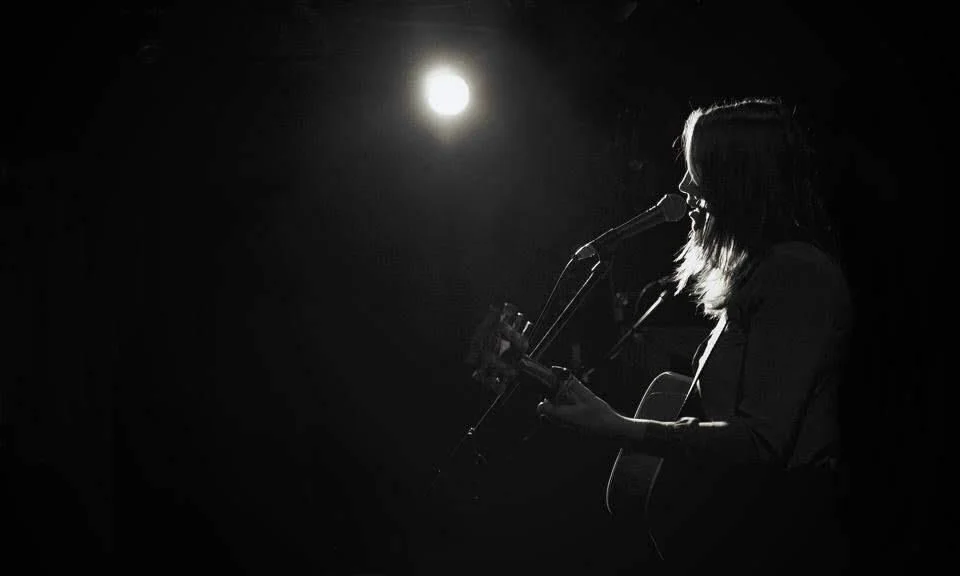
I started my journey with music at a fairly young age. From six years old I recall sitting in front of the stereo for hours listening to Celine Dion and Whitney Houston, trying to imitate their melody lines (not bad vocal coaching and ear training!) I made mix tapes on my radio and cassette recorder. Music was my love and passion from very early on. I was drawn to it. It conjured emotions and communicated in a way that was transcendent. It expressed heart sentiments and soul longings that I didn’t know how to express, or even quite what they were.
But I grew up on a diet of popular music that mostly consisted of love songs, breakup songs, “how will I live without you?” songs. Let’s just say the lyrical (or musical for that matter) depth and breadth of the songs was not particularly vast. And when you listen to commercial radio today, not much has changed. Although these days, it seems there are less straight up love songs, and more “I am bitter/ I really don’t like you/ watch your back” type songs. Songs that express a cynicism or skepticism of love.
When I started pursuing music more seriously in my early twenties, I did a lot of songwriting, both alone, and with others. But I always felt like I was a melody orientated writer - a “top liner”. I struggled to write lyrics that were meaningful - that felt like I was saying something worthy of being said - that hadn’t been said that way before. But you can’t write about what you don’t know. You can’t draw on vocabulary you don’t have and concepts you haven’t understood (at least in a genuine, original and sincere way). I felt as though I was merely an imitator. And in that season of life, I wrote about what I knew. The loves, the losses, the heartaches. The same things that most other female singer songwriters were writing about to varying degrees.
I look back now and what I hear is misplaced longing. Misplaced identity. Now, when I hear a song on the radio about how the singer can’t go on without her love, I think about the love of Jesus and how he fulfills a longing in my heart that no Backstreet Boys song ever could. When I hear a song about bitterness and revenge, I think about the mercy and forgiveness of God and the hope it offers to all who would receive it. But the 14 year old me singing Westlife for hours on end (yes, have a good laugh) didn’t realise that then.
It’s only in hindsight I can recognise that I learnt what “love” was through pop music and rom-coms. This was and is not ideal, helpful or true, and it is only through coming to know the deeply satisfying love of Jesus, and redefining my definition of love by his Word, that I have come to learn what love really looks like. It looks like Jesus, the Son of God, on the cross, laying down his life for those he loves - to give his life as a ransom for many.
I appreciate that opinions and convictions may differ on this matter, but personally, I am not of the opinion that Christians should not listen to any non-Christian music. Lamenting the brokenness of this world in songs is so important. Life is not perfect or peachy - for the Christian or the non-Christian. We all experience suffering, failure and pain. And I think that often, secular (non-Christian) music grapples with this better than Christian music.
If music contains profanity, blasphemy, is derogatory or propagates hate (anything morally amiss) then we should definitely avoid listening and blasting it around the kids. We are called to guard our hearts and minds in Christ Jesus,(Phil 4:7-8, Prov 4:23, Rom 12:2) and so if a song or a film tempts us or exposes us to things that are not honouring God, and contrary to his Word then absolutely listen to that prompting and conviction. More subtle than that: if it continuously reinforces a message that is untrue - about humanity, about God or about love (as per my story above about teenage Tenielle) - I would be mindful of that. I would engage with my kids in an age appropriate way, to help them try to think critically about what they see and hear, because the reality is, they will have to engage with it one day in the world and in the context of real relationships.
It is good to be mindful of subliminal messages in music and screen - absolutely, and to protect children’s minds while they don’t fully understand things. As a Christian, I filter everything through the lens of God’s Word. We should do this for ourselves, and our children. I appreciate this is nuanced and requires prayer, wisdom and discernment. I say these things as a lifelong student of God’s word, a pilgrim on a journey and a work in progress.
I do believe we can and should engage with non-Christian music in a way that is helpful and even insightful. It can lead us to more creative ways of engaging with non-Christians and responding to the narratives they communicate. I’m careful not to lump all “non Christian” music in the same camp (likewise with art and film). There is a big spectrum of music out in the world.
We are all under “common grace.” Because of that, even people who don’t know God can do wonderful things, and create wonderful art. There are songwriters who write incredible songs, with thoughtful and meaningful lyrics that may not share my worldview. In many ways, they communicate truths without necessarily fully knowing or acknowledging the ultimate source of truth. They ask questions of the world and our human condition that are thought provoking. They can contemplate aspects of human emotions that are universally true or experienced by all in a powerful and evocative way. As a Christian songwriter, all of life is Christ’s - there is no sacred/secular divide. So whether I am writing about my marriage, motherhood, or a congregational song on the resurrection - it is all sacred.
Before I really became a Christian, the artist who taught me that lyrics really matter, was Leonard Cohen (and close behind, Joni Mitchell, later on Paul Simon, and the list could go on...) When I was living in Sydney in my early twenties, I went to see Leonard Cohen play live. I only knew “Hallelujah”. He performed with a trio of female vocalists, and a fairly stripped back band. He skipped on and off the stage with his top hat and the sweetest demeanor. At one point in the concert, he stood with his hat held to his chest, and recited the words of the poem, “A thousand kisses deep.” In a stadium full of thousands of people, you could’ve heard a pin drop. This petite man held the attention of an audience of thousands and drew them in with his words. I came away from that concert with a new appreciation for lyrics and the importance and responsibility of using them thoughtfully. It expanded my imagination for words.
At this time in my life, I was on my faith journey. Not long after the Leonard Cohen concert, I whole-heartedly gave my life to Jesus. And from that day, and since then - more than anything else in the world - God’s Word has expanded my heart, mind and imagination for lyrics. Through the Bible, prayer, sermons, commentaries, poems, other Christian music and art - I have grown in my understanding, in my vocabulary, in what I know about Jesus, about people, about the world, and about love. And so I am able to draw from a well-spring that truly is transcendent.
My songs are tethered to something. It has helped me to find the words I had been looking for. I had always felt uncomfortable as a secular singer-songwriter, that it was always about me.“My album”, “my songs”, “my tour”... But now I have a sense of peace and purpose beyond myself when I write and share music, because it’s not primarily about me. I am simply the vessel, carrying a precious message, pointing to things beyond me. Things beautiful, good and true. Things hard and difficult, but not hopeless. And it’s so lifegiving and liberating. I heard Tim Keller recently speak on using our work - our art - as a means to share this message and in service to others. He says, "If you experience a love supreme... instead of using the acclaim of others to fill up your own emptiness, you can minister to others out of your fullness." (Eph 2:10).
Words are powerful. Music is powerful. As my friend Jon Guerra says, “beauty puts us in contact with invisible things”. I am truly excited and inspired by the varying genres of faith inspired music that is coming out in the world today. You can find interesting and faithful music across nearly every genre. Brett McCracken at TGC US writes about culture and arts, and creates playlists of new Christian artists across multiple genres (you can search his “music” articles at TGC US, like this one). Playlists created by “Holy Ghost Record Club” highlight new Christian music from around the world. Jon Guerra’s “Jesus” album is inspired directly from the gospels and is phenomenal, lyrically and musically. John Van Deusen’s “Every Power Wide Awake” was one of the first Christian albums I heard as a new believer; its sincerity and honesty was so endearing. Josh Garrels song “Father Along” asks the question:
“I wondered why
The good man dies, the bad man thrives
And Jesus cries because he loves em' both
We're all cast-aways in need of rope”
I love discovering new music that grapples with and contemplates the vast array of human emotion and experience, that explores the realms of the seen and unseen the way the Psalms do. I appreciate both Christian art, and non Christian art that does this in a skilful, beautiful, thoughtful and interesting way. But I make one final distinction. One final important assertion. While non-Christian art may pose those questions, longings, laments, contemplations and explore possible answers, there is only one answer. Jesus is the answer.
Followers of Jesus can offer a hope and an answer through their art to those questions and longings. We carry a profound, precious and pertinent message. This may sound exclusive, but it’s actually not. It’s available to every one and any one, across all cultures and socio-economic backgrounds and demographics. No matter who you are and what you’ve done.
So while I appreciate art from various origins, I joyfully and gratefully, and quite seriously, hold to the view that we can and should use our art to point people to the whole truth and beauty of the gospel: the good news that all can love and be loved by the Saviour, King, Creator and Lord of the universe. Fellow artists, I encourage you, please create for a transcendent purpose, so we can show a glimpse, a facet, an angle, a window into the Kingdom of light, that a world in darkness so desperately needs. Lord, in your mercy and kindness, inspire us, help us. Artists: go forth and prosper - not for your glory, but the glory of one greater, and infinitely worthy.
If this poem resonated with you, sign up to get honest stories in your inbox for free on Wednesdays from Christian women in Western Australia from March—November 👇🏻
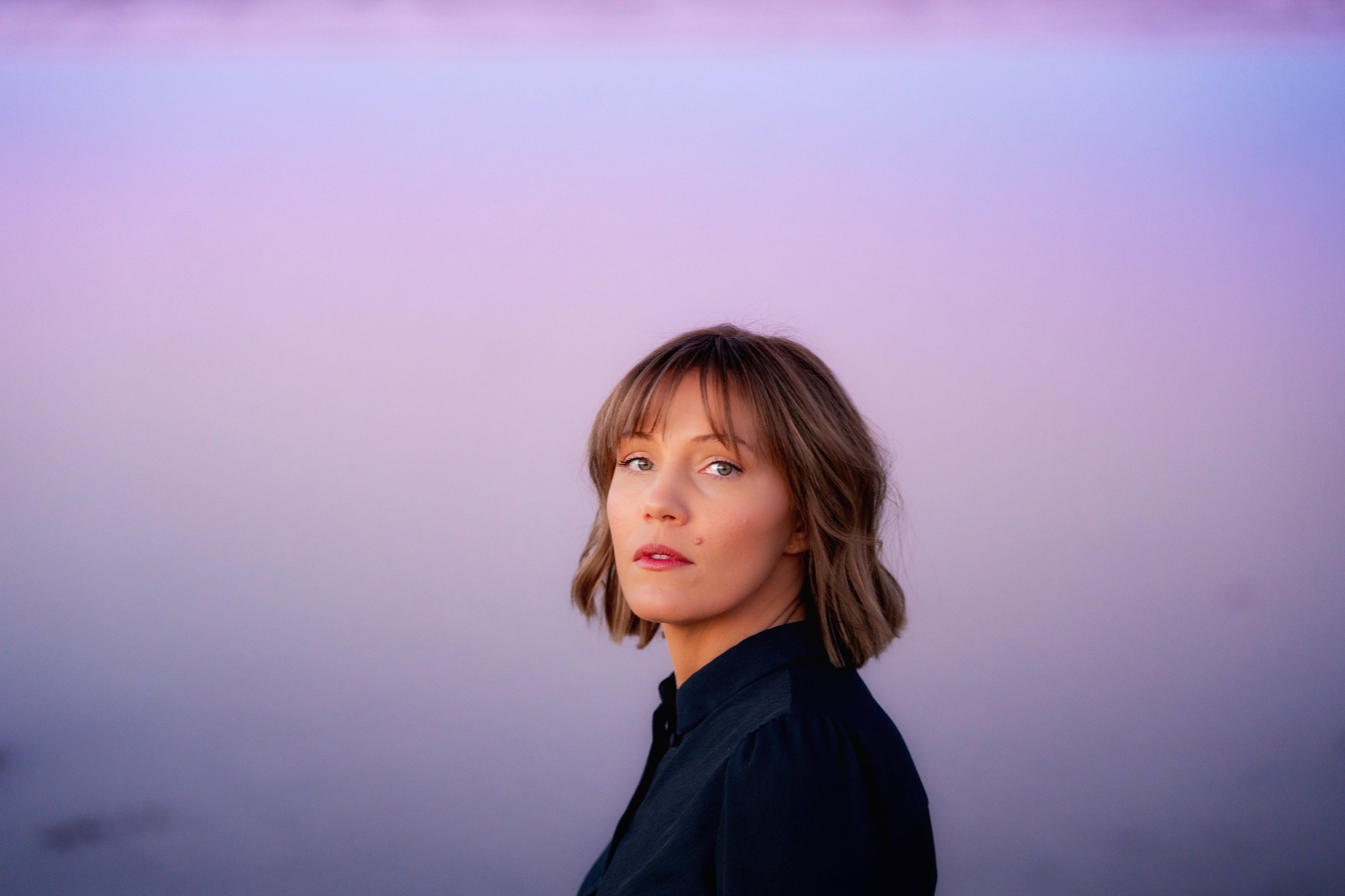
Tenielle Neda—Regular Contributor
Tenielle Neda is a train driver & singer-songwriter from remote Western Australia. She is married to a NZ born camera-man & teacher, Daniel, and they have three precious, young children. Her music is an expression of her faith and experience of life through the lens of the gospel. You can follow her music at tenielleneda.com