
Shaped by Death
Essay and photography by Bethany Smith
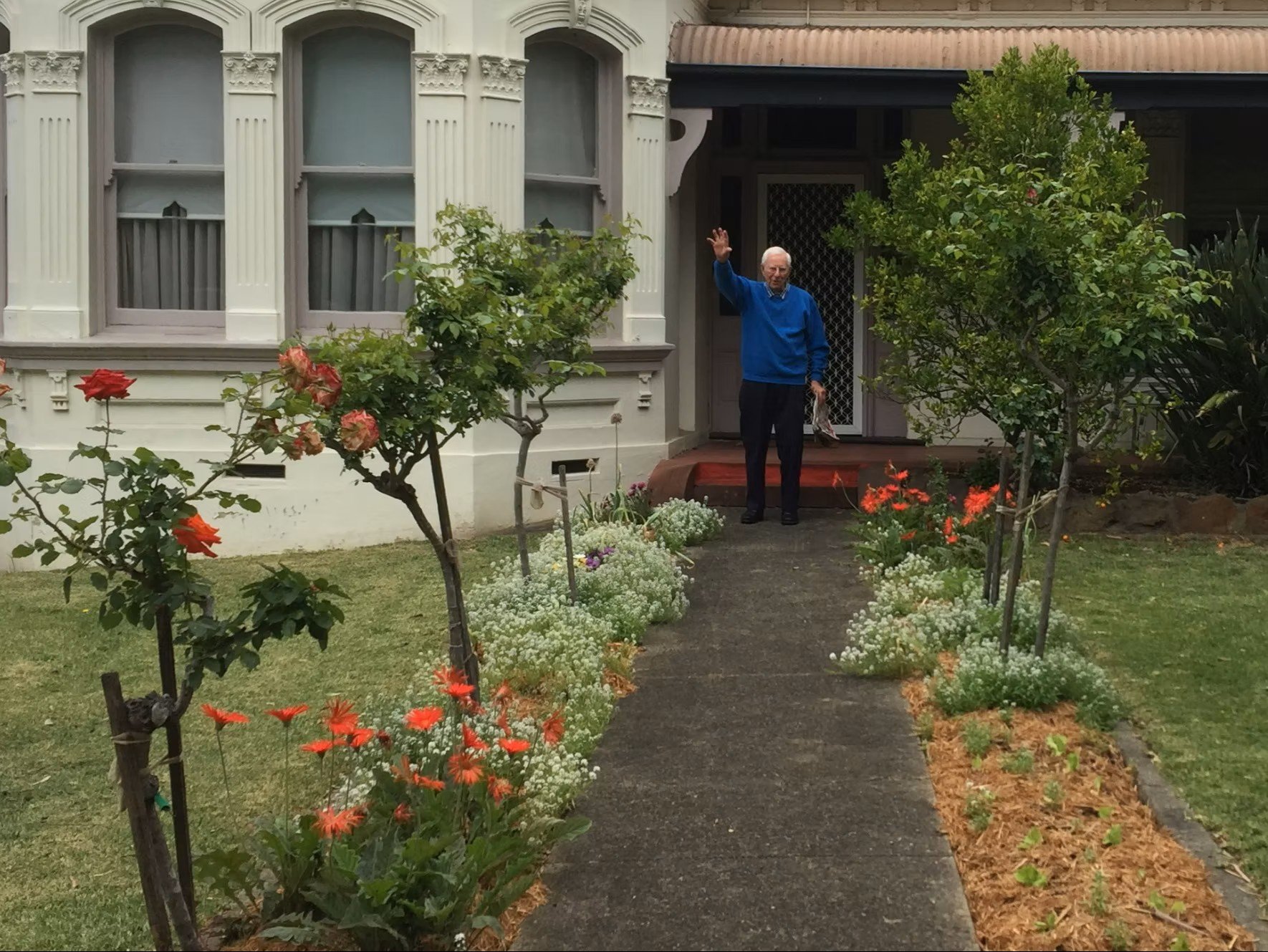
When my grandad died on April 10th in 2021, he left behind a memoir. When I finally read it, I was also reading Destiny: Learning to Live by Preparing to Die by David Gibson. The two were weirdly complementary. With the first I was saddened by the passing of time; with the second I was almost comforted by it. The first had me dwelling on the past while the second had me anticipating the future. The first helped me to process the death of my grandad. The second helped me to process the inevitable death of all my loved ones, even my own death.
Grieving the Past
The memoir was fascinating. I read of memories that my grandad had as a child during the 1930s in rural NSW and London, and as a teenager in Sydney during the war. I read of his years at Sydney Uni where he studied medicine from 1946 as a 17-year-old along with hundreds of ex-servicemen, and where he met my Granny in the Evangelical Union. I discovered just how accomplished a doctor he was—and why he had received the Order of Australia Medal once upon a time. I also found it moving to read about the tragedies and griefs that my grandad had experienced in his life. Stories that are from a different era but are all too familiar. As a child, he stood trapped on a beach with his family as a bushfire engulfed their caravan not far away. And as an adult, he and my granny saw ten loved ones die in the decade they termed “the decade of death.”
As I read my grandad’s memoirs I discovered that the Australia he had known was very different to the one I know. I was surprisingly disheartened to realise that the memories of it have died with him. Few would remember a time when they didn’t have iceboxes let alone fridges, when there wasn’t electricity to heat a house in the cold of winter, when numerous fences might need to be opened for a car journey, and when chicken and avocado were considered strange foods for Christmas.
Somehow, after reading Grandad’s memoirs, I felt both closer to him, knowing more about him, and yet more distant, not having been there with him for any of it nor having heard him recount the stories aloud. I had mixed emotions, knowing his death was timely, but then wanting more time to hear those stories and others. I wanted more time so that my daughter could meet her last surviving great-grandparent.
Ultimately, I was left with a feeling of melancholy. Not really because Grandad himself had gone, as much as I loved him, but because time had gone… Time moves on. His memoirs reminded me of that. The years tick by and history moves on. The lives of loved ones pass and so do our own. And ultimately, we don’t leave much of a mark. We are gone. The fact that Grandad left a memoir doesn’t change that; in fact, it highlights it. His ninety-two and a half years are summarised in just seventy short, handwritten pages!
Anticipating Eternity
Yet it was here that David Gibson’s Destiny became so poignant for me. Gibson works through the biblical book of Ecclesiastes to make the point that “only preparing to die will teach us how to live” (p. 13). He shows us how life is just a breath and death is our biggest problem, yet we all pretend that this isn’t true. But the book challenges us, as Christians, to be the first to stop pretending (p. 13). He contends that keeping our death in clear focus helps us to live properly, that is, to see life and everything in it as a gift from the hand of God rather than living like there’s something to be gained and always striving for more (p. 24).
Reading Destiny helped me to remember that our time in this life doesn’t have to be maximised. The problem of death has been conquered by Jesus at the cross and because of resurrection hope I have the whole of eternity to look forward to! These truths freed me from feeling too disappointed about not hearing my grandad’s stories or having introduced him to my daughter. They reminded me that I needn’t worry that his memories have died with him and that history has moved on. While it is sobering, it is also incredibly freeing to be reminded that this life on earth is “a mist, a vapour, a puff of wind, a bit of smoke” (p. 4) and that God purposed it that way. Our death isn’t a problem we need to avoid but one that Jesus has confronted and defeated. Because of Jesus our death is an inevitability that helps us stay focused on living for him as we remember that there is a wonderful day, a terrible day, awaiting us all. And every day, whether it’s a day of monotony, pleasure, or tragedy, is a day to be lived backwards from that final day. It is our one motivation, our one hope, our one certainty.
“Left to our own devices, we tend to live life forwards… Ecclesiastes teaches us to live life backwards. It encourages us to take the one thing in the future that is certain – our death – and work backwards from that point into all the details and decisions and heartaches of our lives, and to think about them from the perspective of the end.” (xii).
Shaped by Death
I often think about death fearfully or try not to think about it at all. But as a Christian I am free to live shaped by death, not shrouded in it (p. 129). I still endure a heavy heart for those who are sick in mind and body; I will still grieve the loss of loved ones, and one day I’ll experience death myself. But I need not despair when time passes and good things go with it. Instead, with my death in clear focus, I can see that any time at all is but a gift from the Lord, and I can anticipate the whole of eternity with Christ and his people. With Easter just gone, I have been freshly reminded of Christ, God’s greatest gift, who achieved my freedom at the cross so I can sing, “Where, O death, is your victory? Where, O death, is your sting?” (1 Corinthians 15:55), and declare with Paul, “For to me, to live is Christ and to die is gain” (Phil 1:21).
If this story resonated with you, sign up to get honest stories in your inbox for free on Wednesdays from Christian women in Western Australia from March—November 👇🏻
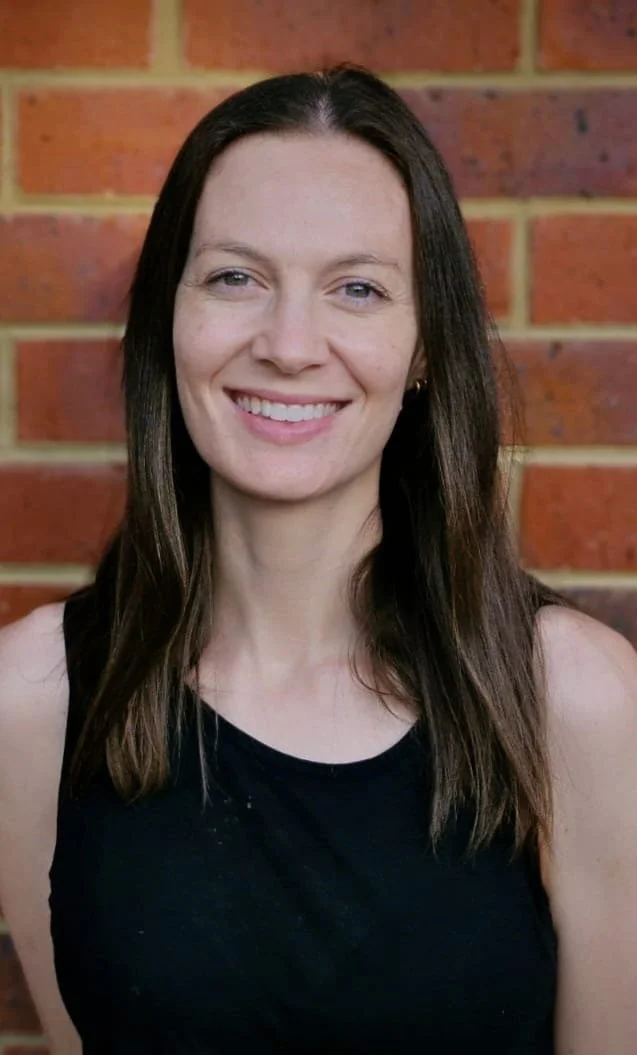
Bethany Smith—Regular Contributor
Bethany grew up on the South Coast of NSW, moved to Sydney for university, and met her husband, Matt, while studying at Moore Theological College. They moved to Perth in 2020 to share the gospel with university students at UWA. They’ve since had four children who she spends her days with, caring for and discipling in the Lord Jesus. Bethany enjoys reading, exercising, baking and attempting to keep her plants alive.